

By Alan Qi, Founder, INF Tech
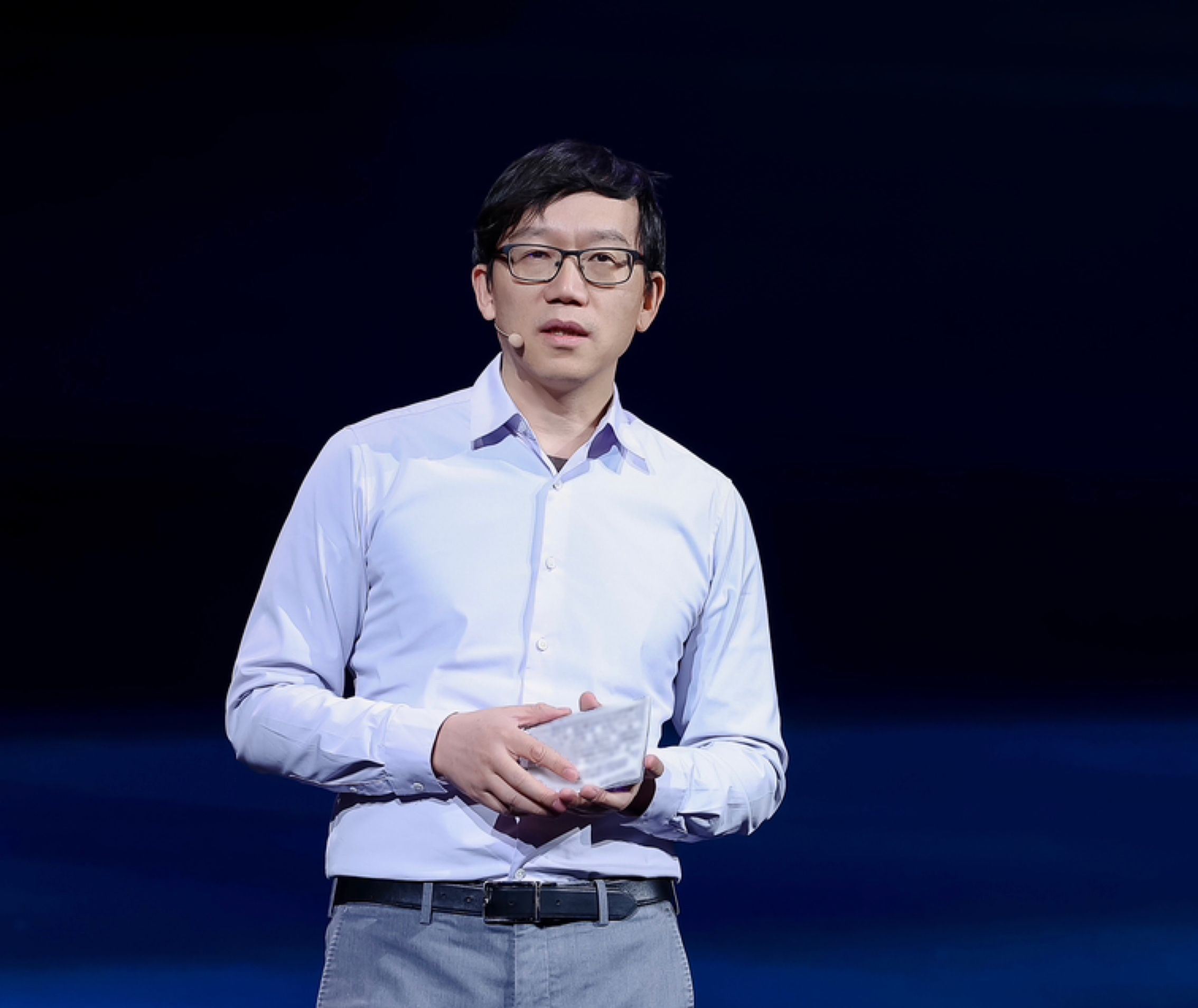
Alan Qi, founder of INF Tech
In technology and finance, trust is not negotiable. During my years leading AI teams at Alibaba and Ant Financial Group, I learnt this as the most precious treasure. On one hand , you can build the most powerful system in the world, but if people do not trust it, they will not use it. No trust, no adoption. On the other hand, trust simplifies things. Built upon trust, technological and financial services can be inclusive and effective.
When generative AI exploded onto the scene, everyone marvelled at what these models could say. But I kept asking a different question: can we trust what they say and do? That question became the foundation for INF.
I had spent years working with data and real-world problems where accuracy and trustworthy decide outcomes. In high-stakes sectors such as finance or education, trust is not optional, it is essential.
Why Trust Matters
Many AI systems today are like black boxes. They make decisions even their creators struggle to explain. In regulated environments, this creates serious risk. In banking, it can mean compliance failures. In education, it can distort learning outcomes.
For me, trustworthy AI means three things: accuracy, explainability, and accountability. A system must know what it does not know. It should explain its reasoning in language people understand and provide evidence for every conclusion. Only then can we build real partnerships between humans and machines.
This mirrors messages from the book Thinking, Fast and Slow by the psychologist and Nobel Laureate Daniel Kahneman. He explained that effective human intelligence combines two modes of thinking, intuitive and deliberate. Similarly, machines should not just talk fast. They should reason, challenge assumptions, and provide insight.
Finance as the First Proof Point
Finance became our first proving ground because it is one of the best environments for AI. Everything is digital, regulated, and driven by numbers. Financial data are very noisy yet highly valuable. If you succeed there, you can succeed anywhere.
One highlight was the Hang Seng Index Innovation Challenge at Hong Kong FinTech Week 2024. More than 200 teams competed to improve how index products are created. Traditionally, analysts compiled share counts and float adjustments by hand. We used our proprietary trustworthy generative AI technology to automate that process, combining various types of data with financial logic and finally emerged as the winner.
We worked side by side with the Hang Seng team, sometimes through typhoons and late nights. That collaboration taught me something fundamental: You need to understand users' pain points deeply before you can build anything really valuable and lasting.
Winning that challenge validated our approach. The Hang Seng team, and later another leading financial institute in Hong Kong, told us our solution and capability were at least six months to a year ahead of alternative AI companies. It proved that trustworthy AI can deliver measurable, auditable value in open financial markets.
But here is a story that never makes it into the pitch decks. A major financial client approached us needing AI capabilities. We got excited, proposed building generative AI agents, the whole suite. Then we sat down with them and realised they did not have basic AI infrastructure in place. They are a very respected, successful company, but like many enterprises, there is still a significant gap between where they stand and a truly usable AI infrastructure.
Fortunately, we could help. My background includes building Alibaba Cloud's AI platform, so we deliver both layers: infrastructure and applications. For financial clients who cannot use public cloud because of data privacy and security concerns, this full-stack approach became one of our key advantages.
From Finance to Education
After finance, we saw a similar trust gap in education. Every industry needs more talent, yet companies struggle to find enough skilled professionals. To become qualified financial professionals, applicants and employees need to pass certification exams but the first-time pass rate is quite low.
We realised the same principles could help. Our team built systems that support personalized training by reasoning what weakness a trainee has and how to improve. In one programme for financial certifications, the average first-time pass rate rose from 20 to 65 percent after using our AI-driven training product. The AI does not just mark answers. It shows learners why they were right or wrong and where they can further improve.
In both finance and education, the lesson is the same: adoption depends on understanding. People must trust the system before they rely on it.
Bridging Two Worlds
Finance and education may seem unrelated, but both involve high-stakes decision-making. Financial analysts and students alike need to justify their conclusions.
The principles we apply in finance also apply in education.
Decisions should be explainable and outcomes verifiable. Whether you are analysing an index or evaluating a student's progress, you need to understand how the result was produced.
At INF, we are building frameworks that make explainability transferable. Once you design trust as a first principle, the applications multiply.
The Singapore Advantage
Singapore has been the ideal base for this journey. It connects East and West, with world-class digital infrastructure and clear governance. The respect for professionalism and rule of law creates a strong foundation for companies like ours.
Being part of the IMDA Spark programme has been a real advantage. Through Spark, we met partners such as OCBC and major insurance players, and received mentorship that shaped how we approach documentation and testing for regulated buyers. What stands out most is that the IMDA team truly understands technology. They discuss details, not just frameworks, and that builds trust, the same value we apply to our products.
Working with various financial institutes in Asia, we refine our technology in real-world, high-stakes environments before expanding regionally. From banks across Asia to sovereign funds in the Middle East, we see the same pattern: leaders want AI they can trust and understand.
Looking Ahead
Trustworthy AI is still evolving, but the direction is clear. We are expanding deeper into wealth management, where transparent knowledge can codify human investment knowledge at scale. We are also exploring how AI can strengthen blockchain security by fixing vulnerabilities in smart contracts.
On the technology side, we continue pushing the frontier of trustworthy generative AI technologies: from retrieval augmented generation, to reinforcement learning, and to neuro-symbolic reasoning. But no matter how advanced the models become, the goal remains the same: ensuring AI works with people, not over them. Our goal is not to simply make AI more powerful, but to make it more credible.
A Founder's Reflection
One lesson I have taken to heart, first popularised by Paul Graham, is that in the beginning you must do things that do not scale. Many founders rush to scale before they understand their users. Start instead by solving one problem deeply. That is how you build something real.
Two years ago, many AI companies were busy with training Large Language Models (LLMs) with billions of parameters. We went the other way by developing trustworthy small language models (SLMs) focused on financial domains. We believe by effectively reducing hallucinations, injecting domain knowledge, and controlling computational cost, trustworthy SLMs and agents can deliever real value to our clients.
Our mission at INF is simple: to make AI services accessible, reliable, and invaluable. When people can trust what AI does and understand why it does it, that is when technology truly becomes human-centred.
We are makers and sellers. But more importantly, we are builders of trust. In finance, in education, in every domain we enter, that principle guides everything we do.
The future of AI is not about making models bigger or faster. It is about making them worthy of trust. That is the challenge worth solving.


